Yorkshire Terrier (Yorkie) Grooming: The Complete Owner's Guide
Yorkshire Terrier (Yorkie) Grooming: The Complete Owner's Guide
Yorkshire Terriers are small dogs with enormous personalities and, for their size, a genuinely impressive coat. Yorkie hair is fine, silky, and grows continuously — it's much closer to human hair in texture than the fur of most dog breeds, which is part of why Yorkies are often considered hypoallergenic-friendly dogs. It's also why their grooming requirements are entirely different from most other breeds, and why getting it right requires specific knowledge of what makes Yorkie hair unique.
When their coat is healthy and well-maintained, it's genuinely beautiful — that steel-blue and tan coloring on a flowing, silky coat is striking in a way few other small breeds can match. This guide will help you understand what your Yorkie's coat needs and how to keep it looking its best.
The Yorkie Coat: What Makes It Different
Yorkshire Terrier coats are single-layered, with no undercoat. The hair is fine, silky in texture, and grows continuously rather than cycling through a traditional shed-and-regrow pattern. Because there's no undercoat and the hair sheds minimally, Yorkies are considered lower-allergen dogs and are often recommended for people with mild dog allergies (though no dog is truly hypoallergenic).
The absence of an undercoat changes the grooming dynamic entirely:
- No deshedding treatments needed
- No coat blows or seasonal shedding events
- Coat texture can be damaged by inappropriate products or tools
- More prone to tangles and breakage in the individual fine hairs
- Coat condition is directly reflective of nutrition and overall health
Color and coat change: Yorkie puppies are born black and tan, and the coat gradually develops into the adult steel-blue and gold/tan coloring as they mature. The transition typically completes by 18–24 months. During this time, coat texture may also change, and it's worth being in regular communication with your groomer about how the coat is developing.
How Often Do Yorkies Need Professional Grooming?
At home: Daily brushing for dogs in full or longer coats; every 2–3 days for shorter puppy cuts.
Professional grooming: Every 4–6 weeks for most pet Yorkies. The continuous growth means the coat length changes noticeably over a few weeks, and dogs in shorter cuts need regular trims to stay looking tidy. Dogs in longer coats need professional cleaning, conditioning, and tidying at similar intervals.
Cut Styles for Yorkshire Terriers
Yorkie cut preferences vary widely, and the right choice depends on your lifestyle and how much home maintenance you're willing to do.
The Show Coat
The full, floor-length traditional Yorkie coat as seen in the conformation ring — parted down the middle, falling evenly on both sides. It's magnificent. It's also a full-time project: daily brushing, oiling, and wrapping to protect the coat from breakage. Very few pet owners maintain a true show coat, and it requires expertise from both owner and groomer.
The Puppy Cut (or Schnauzer Trim)
The most practical cut for most pet Yorkie owners — uniform trimming of the coat to a manageable length (typically 1–2 inches), with a rounded face and neat ears. The dog looks like a puppy throughout their life, is easy to maintain, and is comfortable for active or outdoor-oriented dogs.
The Medium-Length or "Flowing" Pet Cut
Many owners want more coat length than a puppy cut but less than a show coat — a middle ground where the coat flows but is trimmed short enough to be manageable with regular brushing. A skilled groomer can create beautiful variations on this style that suit the individual dog's coat texture and body type.
The Schnauzer-Inspired Trim
Some groomers offer a variation that leaves more beard and eyebrow texture, giving the Yorkie a slightly more terrier-like appearance. Not universally available but worth asking about if you like that look.
Daily Home Maintenance
For Yorkies in full or medium-length coats, daily maintenance is essential.
Tools:
- A pin brush with rounded pins — the right tool for fine Yorkie hair; avoid slicker brushes with sharp, stiff bristles that can break the delicate strands
- A fine-tooth metal comb — for checking work and working through tangles
- A detangling and conditioning spray — essential; use before every brushing session
- A soft slicker brush — some groomers prefer a softer slicker for general brushing; if using, ensure the pins are fine and flexible
Technique: Yorkie hair is fine and breaks easily when dry. Always mist lightly with a conditioning spray before brushing. Work in small sections, using the pin brush gently from the skin outward. The comb is the definitive test: if it passes freely, the section is done.
Yorkie hair can develop static electricity, particularly in dry climates or winter months. Anti-static sprays or a light conditioning mist reduces this and protects the coat.
Topknot: For dogs with longer facial hair, a topknot keeps hair out of the eyes and reduces eye irritation. Use a soft snag-free elastic and check it regularly to ensure it's not pulling or creating a tangle.
Face and Eye Care
Yorkies are prone to tear staining and facial discharge around the eyes, particularly in dogs with lighter coat coloring on the face. The fine hair around the muzzle also collects food and water.
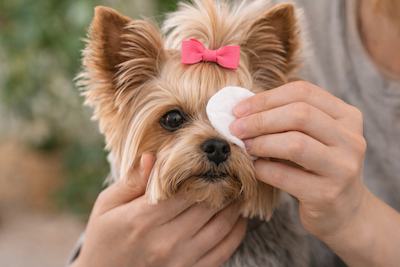
Daily routine: Wipe the area around the eyes with a damp cloth or pet-safe eye wipe. This removes tear discharge before it dries and stains the coat. For persistent staining, ask your groomer or vet about safe tear stain treatment products.
Excess tearing: Yorkies can be prone to eye irritation from hair falling into the eyes, eyelid abnormalities common in small breeds, and environmental allergies. If your Yorkie has increased tearing, cloudy discharge, or is squinting or pawing at their eyes, a veterinary evaluation is warranted. Chronic eye irritation in brachycephalic or small-breed dogs sometimes benefits from an integrative approach — Holistic Vet Directory lists veterinarians who address recurring issues like eye discharge in the context of overall health and nutrition.
Ear Care
Yorkies traditionally have their ears kept upright and tidy — the v-shaped, erect ears are part of the breed's distinctive silhouette. The ears are typically trimmed to remove the fuzzy hair on the tips and on the inside of the ear flap.
Some Yorkies are born with ears that don't stand upright naturally; this is more common in puppies and often corrects itself as the dog matures and the ear muscles develop. If your Yorkie's ears are still soft and floppy at 6–9 months, consult your breeder or vet.
Like other small breeds, Yorkies can grow hair in the ear canal. Check ears weekly for odor, dark discharge, or redness.
Bathing Yorkies
Most Yorkies need a bath every 2–3 weeks. The fine, single coat gets greasy from skin oils and picks up environmental odors relatively quickly compared to double-coated breeds.
Shampoo: Use a gentle, moisturizing dog shampoo appropriate for fine or silky coats. Harsh shampoos strip natural oils and leave the hair dry, prone to static, and more likely to break.
Conditioning: Conditioner is not optional for a Yorkie. Use a leave-in conditioner or a rinse-out conditioner at every bath. Coat conditioning sprays between baths help with daily brushing.
Drying: Use a low-heat blow-dryer while brushing through the coat. Air drying allows curling and tangling. The goal is to dry the coat straight and smooth, which is both the healthiest state for Yorkie hair and the most attractive.
Nail Care
Small dogs often have their nails overlooked because the nails are small and less visually obvious than on a large dog. Yorkie nails grow quickly and can curl if not trimmed regularly. Check monthly; most Yorkies need a trim every 3–4 weeks. Ask your groomer to include nails at every appointment.
What to Tell Your Yorkie's Groomer
- Your preferred cut style (photo is ideal)
- How much coat length you want on the body, legs, face, and ears
- Whether the topknot is important to you
- Your realistic brushing frequency — this helps the groomer choose an appropriate length
- Any skin or coat changes you've noticed (dullness, dryness, thinning)
- Sensitive areas — many Yorkies are particular about their paws and face
Nutrition and Coat Health
Because Yorkie hair is single-layered and fine, its condition is especially reflective of the dog's overall health and nutrition. A dull, dry, or thinning Yorkie coat is often the first visible sign of a nutritional gap or underlying health issue.
High-quality protein and appropriate fatty acid content in the diet support coat condition significantly. Omega-3 fatty acids in particular — from fish oil or flaxseed — can noticeably improve the luster and strength of Yorkie hair. If your Yorkie's coat seems less healthy than it used to be, a conversation with your veterinarian about diet is a worthwhile starting point.
Finding the Right Groomer for Your Yorkie
Yorkie grooming requires specific skill: working confidently with a very small dog, understanding fine single-coat hair, and executing the face and ear work that defines the breed's look. Ask prospective groomers directly about their experience with Yorkies and similar small silky-coated breeds (Silky Terriers, Maltese).
Dog Groomer Locator is a useful starting point for finding groomers who list small breed or terrier experience — look for groomers who specifically mention the breeds they work with most, rather than a generic "all breeds" listing.
At-a-Glance: Yorkie Grooming Schedule
| Task | Frequency |
|---|---|
| Brushing (longer coats) | Daily |
| Brushing (puppy cut) | Every 2–3 days |
| Eye cleaning | Daily |
| Bath | Every 2–3 weeks |
| Professional groom | Every 4–6 weeks |
| Nail trim | Every 3–4 weeks |
| Ear check | Weekly |
Yorkies are among the most charming dogs in existence — big personalities in small packages, with a coat that is genuinely beautiful when it's properly cared for. The investment in regular professional grooming and consistent home maintenance is absolutely worth it. These dogs thrive when they're well-cared-for, and a well-maintained Yorkie coat is a point of genuine pride.
About the Author
Dog Groomer Locator Editorial Team
Our editorial team researches grooming topics using verified business data and breed-care references. Content is drafted with AI assistance, fact-checked against published sources, and reviewed by publisher Kevin Collins.