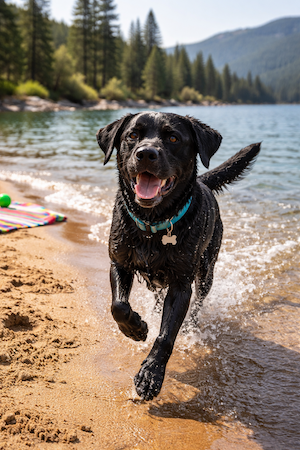
Summer Dog Grooming: How to Keep Your Dog Cool Without Ruining Their Coat
Summer Dog Grooming: How to Keep Your Dog Cool Without Ruining Their Coat
Summer brings a predictable wave of grooming questions, and the most common one is some version of: "Should I shave my dog so they're cooler in the heat?" The instinct is understandable — if you're hot, taking off your sweater helps. But dogs aren't wearing sweaters. Some of them are wearing sophisticated thermoregulation systems that we'd be foolish to interfere with.
Summer dog grooming is worth doing thoughtfully. There are real adjustments that help dogs in hot weather, and there are well-intentioned moves that actually make things worse. This guide covers both.
How Dogs Actually Cool Down
First, a quick biology note, because it makes everything else make more sense.
Dogs don't sweat through their skin the way humans do. They have a small number of sweat glands in their paw pads, but the primary cooling mechanism is panting. Panting moves air rapidly over the moist surfaces of the mouth, tongue, and respiratory tract, allowing evaporation to carry heat away.
This means that a dog's coat plays a much smaller role in heat regulation than we assume. Dogs don't rely on their skin surface for evaporative cooling — they rely on their airways. A shaved dog doesn't gain a new way to cool down. They just lose the benefits their coat was providing.
Those benefits include:
UV protection. Dog skin, like human skin, can sunburn. Guard hairs reflect solar radiation and reduce UV exposure to the skin. Shaved dogs are significantly more susceptible to sunburn, particularly pink-skinned dogs like Dalmatians, Boxers, and light-pigmented individuals of any breed.
Insulation — in both directions. Insulation doesn't just keep heat in; it also keeps heat out. A properly groomed coat acts as a buffer between the ambient heat and the dog's body, similar to the way a thermos keeps both hot and cold liquids at temperature longer. This is particularly true for double-coated breeds.
Dirt and allergen barrier. The coat prevents environmental irritants from reaching the skin — something that becomes more noticeable in summer when allergen loads are high.
Double-Coated Breeds: Please Don't Shave Them
We said this in the spring shedding post and we'll say it again here: do not shave a double-coated dog for summer.
The breeds in this category include Siberian Huskies, Alaskan Malamutes, Samoyeds, Golden Retrievers, Labrador Retrievers, German Shepherds, Border Collies, Australian Shepherds, Corgis, Chow Chows, Pomeranians, Bernese Mountain Dogs, Great Pyrenees, and all the other breeds who have that characteristic soft, dense undercoat beneath a layer of guard hairs.
Shaving these dogs removes the topcoat that provides UV protection and the insulative layer that buffers against ambient heat. The dog is left with either bare skin (if shaved very close) or a sparse layer of mismatched coat that doesn't provide the benefits of either the original undercoat or topcoat.
There's also the long-term coat issue. Double-coated breeds that are shaved frequently can develop permanent coat texture changes. The guard hairs and undercoat grow at different rates, and once the natural ratio is disrupted by shaving, some dogs never fully recover the correct coat texture. For a working dog or a show dog, this is a significant problem. For a pet, it means a lifetime of a coat that's harder to manage and less effective at its original purpose.
What helps double-coated dogs in summer:
- Regular de-shedding to remove dead undercoat, which traps heat
- A thorough professional de-shed at the start of summer
- Fresh water always available
- Shade during peak heat hours (10 a.m. to 4 p.m.)
- Early morning and evening walks
- Cooling mats and paddling pools if the dog enjoys them
- Good airflow indoors
Single-Coated and Continuously-Growing Breeds: Yes, Trim for Summer
For breeds with single-layer coats that grow continuously — Poodles, Bichons, Doodles, Shih Tzus, Maltese, Lhasa Apsos, Portuguese Water Dogs, and similar — a shorter summer cut makes genuine sense.
These breeds don't have a self-regulating double coat. Their coat grows and grows without seasonal shedding, and a long coat on a warm day in these breeds genuinely does add to their thermal load, particularly around the belly and groin where there's less airflow.
A summer trim for these breeds means:
Shorter body length. Going from a longer pet trim to a shorter one — perhaps half an inch to an inch all over instead of two to three inches — improves airflow to the skin without exposing it to sunburn risk.
Trimmed belly coat. The belly and inner thighs are relatively hairless areas with higher blood vessel density — they're essentially natural cooling panels. Trimming the belly coat shorter (not shaved, just shorter) improves heat dissipation.
Regular baths. Clean coat dries faster, doesn't trap heat and moisture, and feels more comfortable. More frequent baths in summer — every three to four weeks instead of every six — help these breeds stay comfortable.
Paw Pad Care in Summer
This is the area most owners overlook in summer grooming, and it matters a lot. Pavement and artificial turf can reach temperatures of 140°F or more on a hot day — a temperature that causes burns to paw pads within sixty seconds of contact.
The quick test: press the back of your hand to the pavement for seven seconds. If you can't hold it there, it's too hot for your dog's paws.
When to walk: Early morning or after sunset, when pavement temperatures have dropped. During the midday and early afternoon heat, stick to grass, dirt paths, or shaded areas.
Paw pad conditioning: Hot pavement, sand, and salt (common near beaches or pool surroundings) dries out paw pads. A good paw pad balm applied a few times a week keeps the pads supple and resistant to cracking. Look for formulas with beeswax, shea butter, or coconut oil. Avoid anything with artificial fragrance.
Paw pad trimming: Hair that grows between the paw pads should be kept trimmed in summer — it traps heat and collects debris. Your groomer will do this as part of a standard appointment; you can maintain it between visits with blunt-tipped scissors.
Dog boots: Some dogs tolerate boots; most don't initially. If you want to use them, introduce them gradually with positive reinforcement. On truly hot days, they're effective protection — but a dog who's frantically trying to remove their boots isn't benefiting from them.
Water Safety and Coat After Swimming
Summer means swimming — lakes, pools, beaches, sprinklers. Great exercise, good cooling, and mostly fine for coats as long as you follow up properly.
Rinse after chlorine or salt water. Both chlorine and salt dehydrate and can irritate skin and coat over time. A quick rinse with fresh water after any pool or ocean swim prevents buildup.
Dry ears after swimming. This is a major one. Water that sits in the ear canal creates the warm, moist environment that leads to ear infections — and ear infections spike in summer precisely because dogs swim more. After any swim, use a cotton ball to absorb visible water from the outer ear canal, then allow the ears to air dry in good airflow. For dogs prone to ear infections, your vet may recommend a drying ear solution to use after swimming.
Brush after drying. Wet coat that air-dries unsupported can mat, particularly on wavy or curly breeds. Especially for Doodles, Cocker Spaniels, and similar breeds, brushing while the coat is drying (or after towel drying) prevents tangles from setting in.
Heat-Related Risk Signs to Know
No grooming guide for summer is complete without this: recognize heatstroke early.
Signs of heat exhaustion or early heatstroke: excessive panting, drooling more than usual, bright red or pale gums, weakness, stumbling, seeking shade or cold surfaces frantically.
Signs of serious heatstroke: the above, plus vomiting, diarrhea, loss of coordination, collapse, or unresponsiveness.
Heatstroke is a veterinary emergency. If you see signs of serious overheating, move your dog to a cool area, apply cool (not ice cold) water to the groin, armpits, and neck where blood vessels are close to the surface, and get to a vet immediately.
Certain dogs are higher risk in heat: brachycephalic breeds (Bulldogs, French Bulldogs, Pugs, Boxers), older dogs, overweight dogs, very young puppies, and dogs with heart or respiratory conditions. These dogs need extra summer vigilance — both in how you manage their outdoor time and in how you approach their grooming. Keep their appointments at cooler times of day and minimize heat exposure at the grooming salon.
Updating Your Summer Grooming Schedule
Summer typically means more outdoor time, more swimming, more activity — all of which means more grooming maintenance, not less. A few adjustments to think about:
Increase bathing frequency. Once a month may be right in winter; once every three weeks often makes more sense in summer.
Book earlier in the day. Morning grooming appointments are cooler for your dog's transport and wait time.
Schedule a mid-summer de-shed. Even if you did a spring de-shed, some dogs benefit from a second one in early summer as any remaining undercoat blows out.
Keep up with nail trims. Dogs who are more active outdoors in summer wear nails down more quickly, but the schedule still varies by dog — check every three weeks and trim as needed.
You can find groomers experienced with summer coat management, heat-sensitive breeds, and seasonal de-shed services through Dog Groomer Locator. Many groomers also offer express summer services — a quick bath, blow-out, and tidy-up for dogs who just need a refresh between full appointments.
Summer dog grooming done right is about working with your dog's coat, not against it. Understand what the coat is doing, make adjustments that improve airflow and cleanliness without compromising the coat's natural function, and focus on the things that actually reduce heat burden: water, shade, and early morning activity.
About the Author
Dog Groomer Locator Editorial Team
Our editorial team researches grooming topics using verified business data and breed-care references. Content is drafted with AI assistance, fact-checked against published sources, and reviewed by publisher Kevin Collins.