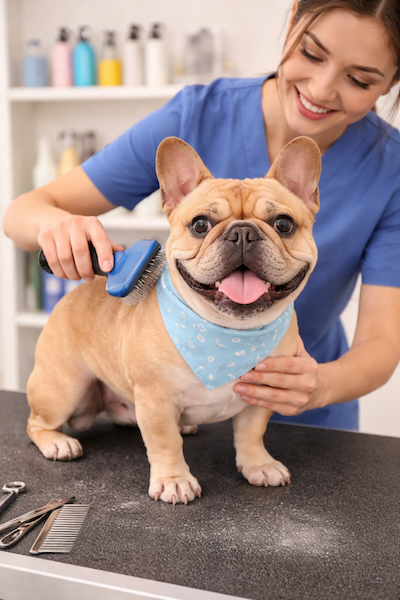
French Bulldog Grooming: What Frenchie Owners Need to Know
French Bulldog Grooming: What Frenchie Owners Need to Know
If you own a French Bulldog, you've probably heard the phrase "low maintenance coat" more than once. And in terms of brushing and trimming, sure — Frenchies don't need monthly haircuts, and they won't mat. But calling a French Bulldog low maintenance is a bit like calling a convertible low maintenance because it doesn't need a roof rack. The complexity just lives somewhere else.
For Frenchies, the complexity lives in their skin folds, their ears, their short wrinkled face, and their tendency to collect moisture in places that turn quickly into bacterial or yeast infections. French Bulldogs who develop skin problems almost always have the same thing in common: owners who focused on the coat and overlooked everything else.
This guide covers the full picture of French Bulldog grooming — what you can do at home, what benefits from professional attention, and how to spot the early signs that something's wrong before it becomes a vet visit.
The Coat: Simple, But Not Nothing
French Bulldogs have a short, smooth, single-layer coat that sheds more than most people expect. Frenchies are not heavy shedders by any measure, but they do shed year-round, and because the hairs are short and fine, they work themselves into fabric and furniture in a way that longer hairs don't.
Brushing: A rubber curry brush or a soft-bristle brush used two to three times a week is sufficient for most Frenchies. The goal isn't detangling — it's loosening dead coat, stimulating the skin, and distributing natural oils. Some Frenchies love being brushed; others tolerate it. Starting early and keeping sessions short helps build positive associations.
Bathing: Every four to six weeks is the general guidance for a Frenchie with healthy skin, but this varies. Dogs who spend a lot of time outside or who have skin sensitivities may need more or less frequent bathing. Always use a shampoo formulated for sensitive skin or for dogs prone to skin issues — Frenchies are not candidates for harsh or heavily fragranced products. Rinse thoroughly. Shampoo residue left in skin creases is a recipe for irritation.
Drying: This is where Frenchie owners need to pay extra attention. After a bath, the skin folds must be dried completely — not just wiped, but dried. A low-heat dryer or clean towels worked carefully into the creases will do the job. A damp fold is an invitation for yeast or bacteria to set up shop.
Skin Fold Care: The Most Important Part of Frenchie Grooming
The facial folds — the wrinkles over the nose, under the eyes, and across the muzzle — are what give French Bulldogs their endearing, grumpy-cute look. They're also the most maintenance-intensive part of the breed.
Skin folds trap moisture, warmth, and debris. Without regular cleaning, they develop a condition commonly called "fold dermatitis" — a bacterial or yeast infection characterized by redness, odor, discharge, and visible irritation. In mild cases, it looks like a red crease. In severe cases, the dog is in real discomfort and needs veterinary treatment.
How to clean Frenchie folds:
Use an unscented baby wipe, a dog-specific fold wipe, or a soft cloth dampened with a gentle cleanser. Work into each fold carefully, wiping away any accumulated debris or discharge. Then — and this step is critical — dry the area. A dry cotton ball or soft cloth used after wiping removes the moisture that cleaning itself introduces.
How often? Daily is ideal, especially in warm or humid weather. At minimum, three to four times a week. Make it part of your evening routine. The whole process takes about two minutes once your dog is comfortable with it.
Tail pocket: Many French Bulldogs have a tail pocket — a small fold of skin around the base of their screw tail. It's easy to overlook because it's tucked away, but it collects just as much moisture and debris as the facial folds. Check it during each cleaning session and wipe it out with the same care.
Signs that warrant a vet visit: Persistent redness, a sour or yeasty odor that doesn't clear with cleaning, visible discharge that isn't just accumulated dirt, or a dog who scratches or rubs the face constantly. These are signs of an established infection, not just a maintenance issue.
Ear Care
French Bulldog ears are large, open, and upright — which actually means they get better airflow than floppy-eared breeds and are somewhat less prone to infection. But they still collect dust, debris, and wax, and they still need regular cleaning.
Check your Frenchie's ears once a week. Healthy ears are pale pink, odor-free, and have minimal visible wax. A small amount of light-tan wax is normal. Dark brown or black buildup, strong odor, redness, or a dog who scratches at their ears consistently are all signs to investigate.
For routine cleaning, use a veterinarian-approved ear cleaner and cotton balls — never cotton swabs, which can push debris deeper into the ear canal. Squirt the cleaner into the ear, massage the base of the ear gently for about thirty seconds, then let your dog shake their head. Wipe the visible outer ear with a cotton ball. Don't go deeper than you can see.
For Frenchies prone to ear infections, your vet may recommend a specific cleaning protocol. Some groomers offer ear cleaning as part of a full-service appointment — this is fine for maintenance, but if you're seeing signs of infection, that's a vet conversation first.
Nail Trimming
French Bulldogs have compact, muscular paws and strong nails that grow quickly. Because many Frenchies are indoor dogs who don't cover a lot of rough pavement, their nails don't self-file the way working or active dogs' nails do.
Nails should be trimmed every three to four weeks. Nails that are too long change a dog's posture and gait — the pressure shifts backward on the paw, which over time contributes to joint problems. Long nails are also more prone to cracking and tearing, which is painful and occasionally requires veterinary attention.
Many Frenchies are not enthusiastic about nail trimming. Start slow: handle the paws daily from puppyhood, touching each toe and nail without the clippers present. Introduce the clippers as a neutral object before using them. Trim just the tip — the "quick" (the blood vessel inside the nail) is closer to the end in dogs with shorter nails, but Frenchies' nails tend to have a clear distinction between the opaque tip and the translucent base.
If your dog's nails are black, the quick is harder to see. Trim small amounts at a time, watching the cut surface. When the center of the cut nail begins to look slightly darker or doughy-textured, you're approaching the quick — stop there.
A professional groomer can trim nails as a standalone service if it's become a battle at home. There's no shame in outsourcing the tasks your dog truly resists, especially if stress at home is souring your dog's relationship with handling.
Teeth Brushing
French Bulldogs are a brachycephalic breed — their shortened skull means their teeth are crowded into a smaller space than breeds with longer muzzles. This crowding makes dental disease more likely, and Frenchies are among the breeds most prone to tartar buildup, gum disease, and tooth loss.
Dental care should be part of your Frenchie's regular routine. Daily brushing with a dog-specific toothpaste (enzymatic pastes are most effective) and a finger brush or small-headed toothbrush is the gold standard. If daily brushing isn't realistic, aim for three to four times per week. Dental chews, water additives, and dental diets are supplements to brushing, not replacements.
Annual dental cleanings under anesthesia at your veterinarian are typically necessary for Frenchies, starting around age two or three. The frequency depends on how much home brushing happens and your individual dog's tartar-building tendency.
The Brachycephalic Factor in Grooming
French Bulldogs are brachycephalic — their flat faces affect more than just their appearance. It affects how they should be handled during grooming.
Brachycephalic dogs can overheat quickly and struggle with prolonged stress more than other breeds because their ability to breathe hard and cool down is limited. This means:
- Keep grooming sessions at a comfortable temperature. Never groom a Frenchie in a hot room or leave them in a warm crate while waiting.
- Watch for signs of stress or overheating: excessive panting, a widened, panicked expression, pawing at the face, or the characteristic "reverse sneeze" that Frenchies use to clear their airways.
- Keep sessions shorter. For a puppy or anxious Frenchie, two or three shorter sessions per week are better than one long one.
When you're choosing a professional groomer for your Frenchie, make sure they have experience with brachycephalic breeds. Ask specifically how they handle drying — dryers that are fine for a Labrador can overheat a Frenchie in minutes. A groomer who is unfamiliar with brachycephalic concerns is a real risk.
You can search for groomers experienced with Frenchies and other flat-faced breeds at Dog Groomer Locator, where you can filter by specialty and read service listings before booking.
Building a Home Grooming Routine
Here's what a practical weekly routine looks like for most French Bulldogs:
Daily: Wipe and dry facial folds and tail pocket. Check for unusual discharge or redness.
Every 2–3 days: Quick brush-down with a rubber curry brush. Teeth brushing (ideally daily, but a few times a week works).
Weekly: Ear check and cleaning. Full fold inspection including areas less visible.
Every 3–4 weeks: Nail trim (or professional nail service). Full bath, including thorough fold cleaning and drying.
Every 6–8 weeks: Professional grooming appointment for a full bath, blow-out, nail grind, ear cleaning, and fold treatment.
What a Professional Grooming Appointment Should Include for a Frenchie
When you book a full-service groom for your French Bulldog, the appointment should include:
- Bath with a suitable sensitive-skin shampoo and conditioner
- Thorough drying, including between folds
- Fold cleaning and drying
- Ear cleaning
- Nail trim (and ideally a nail grind to smooth sharp edges)
- Anal gland expression (optional but often included)
- Paw pad moisturizing if the pads are dry
Ask upfront what's included in the base price and what's charged as an add-on. A good groomer will also give you a brief report on anything they noticed — a fold that looks a bit more irritated than usual, a nail that had a slight crack, an ear that might be worth having a vet look at. That kind of attentive communication is what separates a professional from someone just moving dogs through appointments.
A Quick Note on Frenchie Skin Issues
French Bulldogs are predisposed to skin conditions beyond fold dermatitis — including environmental and food allergies, dry and flaky skin, and a condition called ichthyosis in some lines. If your Frenchie has persistent itching, recurring skin infections, significant dandruff, or coat that looks dull and lifeless despite good grooming, those are signs to discuss with your vet. A good groomer can help you maintain whatever treatment protocol your vet recommends — medicated shampoos, specific rinses, or adjusted bathing frequency — but the diagnosis needs to come from a professional.
For Frenchies with chronic skin or immune-related issues, some owners find it helpful to work with a veterinarian who takes a more integrative approach to chronic conditions. Holistic Vet Directory can help you find vets who combine conventional diagnosis with nutritional and lifestyle support for dogs with recurring skin problems.
French Bulldogs are genuinely one of the most rewarding breeds to groom — they're sociable, expressive, and most of them love the attention once they're comfortable with the process. The work is in the details: the fold cleaning, the ear checks, the consistent nail care. Build those habits early and your Frenchie will be healthier, more comfortable, and a lot more pleasant-smelling for it.
About the Author
Dog Groomer Locator Editorial Team
Our editorial team researches grooming topics using verified business data and breed-care references. Content is drafted with AI assistance, fact-checked against published sources, and reviewed by publisher Kevin Collins.