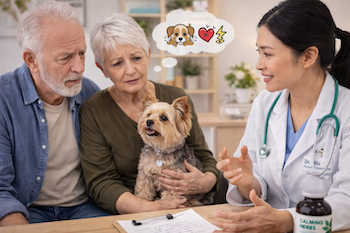
How to Find a Dog Groomer for an Anxious or Reactive Dog
How to Find a Dog Groomer for an Anxious or Reactive Dog
Grooming is inherently strange from a dog's perspective. You're taken to an unfamiliar place, handled by someone you may not know, restrained in various positions, and exposed to dryers, clippers, and the sounds and smells of other dogs — all while having your most sensitive areas (ears, paws, face, rear) touched and worked on. For a well-socialized dog who was introduced to grooming gradually as a puppy, this becomes routine. For an anxious or reactive dog, it can be a genuinely distressing experience.
Let's say this clearly: the fact that your dog is anxious about grooming is not a character flaw, and it's not necessarily your fault. Some dogs have a genetic predisposition toward anxiety or reactivity. Some had early experiences that created lasting negative associations. Some just have sensitive nervous systems. What matters now is finding an approach — and a groomer — that meets your dog where they are.
The Spectrum of Grooming Anxiety
Anxiety in grooming shows up differently in different dogs. Understanding where your dog falls helps you communicate more clearly with a potential groomer.
Mildly nervous: The dog is clearly uncomfortable — ears back, tail tucked, heavy panting — but remains manageable throughout the appointment. They may shake or be restless but don't bite or snap. These dogs can usually be handled by any experienced groomer who is patient and attentive.
Moderately anxious: The dog shows active resistance — moving away from tools, mouthing (soft biting as a warning), excessive vocalization, or shutting down completely. These dogs need a groomer with specific experience in fear-reduction techniques and the patience to work at a slower pace.
Significantly reactive or bite-history dogs: Dogs who snap or bite when grooming-related triggers occur need a groomer with advanced handling skills. This is not the same as a dangerous dog — reactivity in a grooming context is usually fear-based, not aggression-based — but it requires expertise, appropriate safety measures, and a patient, low-pressure approach.
Knowing which category your dog falls into helps you set realistic expectations and ask the right questions when vetting groomers.
What to Look for in a Groomer for an Anxious Dog
Not all groomers are equipped to handle anxiety and reactivity well. Some have the temperament and training; others are skilled with well-behaved dogs and frankly out of their depth with challenging ones. Here's how to identify groomers who actually know what they're doing.
Ask directly about their experience with anxious dogs
Don't ask "Are you good with nervous dogs?" — everyone will say yes. Ask:
- "What's your approach when a dog is showing signs of anxiety on the table?"
- "Do you have experience with fear-free or low-stress handling techniques?"
- "How do you handle a dog who mouths or snaps when working on a sensitive area?"
A groomer with real experience will answer these questions specifically. They'll mention things like going slower, adjusting body position, taking breaks, using counter-conditioning, working with the dog's triggers rather than forcing through them. Vague answers like "we just take it slow" are less reassuring than specific descriptions of technique.
Look for Fear Free or Low Stress Handling certification
Fear Free is a training program that certifies veterinary and grooming professionals in techniques specifically designed to reduce fear, anxiety, and stress during handling. A Fear Free Certified groomer has completed coursework in reading animal body language, managing triggers, and adjusting technique for anxious patients. It's not the only marker of quality, but it's a meaningful one for this specific concern.
Consider mobile grooming
For many anxious dogs, the salon environment itself is a significant part of the problem. The sounds of other dogs, the unfamiliar space, the time spent waiting — it all adds up. Mobile grooming eliminates most of that. Your dog is groomed in your driveway or outside your home, in a quiet one-on-one setting with no other dogs present. For dogs who are specifically anxious about unfamiliar environments or other dogs, this can make an enormous difference.
Look for salons that offer "solo grooming" or quiet hours
Some salons offer appointments structured so your dog is the only one being groomed — not just your turn in a shared space, but actually the only dog in the active grooming area. Others offer early morning or late afternoon "quiet" slots when the salon is less chaotic. These accommodations are worth asking about.
Smaller salons over chain stores
This isn't a universal rule, but boutique salons and independent groomers often have more flexibility to accommodate anxious dogs than high-volume chain grooming departments. A smaller shop can more easily offer extended appointment times, desensitization sessions, and communication with owners.
Techniques That Make a Real Difference
When you're talking to a potential groomer, you want to hear some of these approaches mentioned:
Systematic desensitization and counter-conditioning: The technical term for gradually introducing grooming stimuli at a level the dog can tolerate, then pairing those stimuli with positive experiences (usually food). For a dog who's afraid of the nail clippers, this might start with just showing the clippers at a distance while giving treats, then touching them to the paw without clipping, then clipping one nail at a time across multiple sessions. Slow, yes — but the alternative is forcing a dog through something they find traumatic, which makes it worse every time.
Reading and responding to body language: A skilled groomer is always watching. Whale eye (the whites of the eyes visible), lip licking, yawning, turning away, flattened ears, tucked tail, rigid posture — these are stress signals, and they escalate if ignored. A groomer who responds to these signals by pausing, giving the dog a moment, changing body position, or backing off a tool is actively managing anxiety. A groomer who pushes through is making it worse.
Taking breaks: An anxious dog can sometimes get through a grooming appointment in two or three shorter sessions with breaks in between better than they can get through one continuous session. Not every groomer can schedule this way, but it's worth asking about.
Tool selection: Some dogs are fine with scissors but terrified of clippers. Some are okay with the clippers but panic when the dryer starts. A flexible groomer can adapt — using scissoring over clipping where possible, using a low-velocity dryer or towels instead of a full force dryer, or finding a sequence of procedures that works better for the individual dog.
Muzzle training as a safety tool (not a punishment): For dogs with a bite history, a properly fitted muzzle used correctly is a safety measure that protects both the dog and the groomer. It should be introduced as a positive experience, not forced on a panicking dog. A groomer who suggests muzzling should explain how they introduce it and use it. Muzzle training at home can actually help anxious dogs — reach out to a positive-reinforcement trainer if you'd like to work on this.
What You Can Do Before the Appointment
The work doesn't start at the grooming salon — it starts at home, between appointments.
Handle your dog's paws, ears, and face daily. The more a dog is accustomed to being touched in grooming-relevant areas in the safety of their own home, the less overwhelming professional handling feels. Make it a positive experience: touch a paw, give a treat. Work under the ear flap, give a treat. Tap the nail against something hard, give a treat. It takes five minutes and has a compounding effect.
Introduce grooming tools at home. Let your dog sniff and investigate a brush, nail clipper, or the sound of clippers on low volume. Don't use them — just associate them with neutral or positive experiences before the appointment.
Don't feed a large meal right before grooming. A dog with a full stomach who's also anxious is more likely to feel nauseated. A light meal two or three hours before is ideal.
Stay calm at drop-off. Dogs read our energy, and long, emotional goodbyes at the salon door amplify anxiety. A warm but brief drop-off — a few words with the groomer, a pat for your dog, then leave — is usually easier for anxious dogs than a prolonged farewell.
Ask about pre-appointment calming approaches. Some owners use calming supplements (various L-theanine products, Adaptil pheromone spray), anxiety wraps, or similar tools. The evidence is mixed but some dogs do respond to them. For dogs with serious anxiety, a conversation with your veterinarian about whether anti-anxiety medication for grooming appointments is appropriate is worth having — particularly for dogs whose stress response is severe enough to make grooming genuinely dangerous or traumatic. Veterinarians who take an integrative approach often have additional tools for managing anxiety holistically; Holistic Vet Directory can help you find one who addresses both the behavioral and physical dimensions of anxiety in dogs.
Setting Up for Success: The First Appointment
When you find a groomer you think might be a good fit, have a conversation before the first appointment. Share:
- Your dog's specific triggers (clippers, dryers, nail trimming, strangers touching their head, etc.)
- Their history (previous bad grooming experience, rescue background, known trauma)
- What has and hasn't worked in the past
- Any safety considerations (bite history, resource guarding, specific handling instructions from a trainer or behaviorist)
A groomer who listens carefully, asks follow-up questions, and proposes a specific plan is someone who takes this seriously. A groomer who waves it off with "don't worry, we're great with nervous dogs" without engaging with the specifics is less reassuring.
For the first appointment, consider scheduling something shorter than a full groom — a nail trim only, or a bath without a cut. The goal of the first visit is to establish a positive association with the space and the person. Getting the dog comfortable with the groomer is worth more long-term than getting the full groom done in session one.
After the Appointment
Pay attention to your dog's behavior after the appointment. A tired dog who sleeps on the way home is normal; grooming is mentally and physically tiring. A dog who continues to shake hours later, who is unusually clingy or withdrawn, who won't eat or play — those are signs that the appointment was significantly stressful and the approach needs to change.
Always ask the groomer how your dog did. A good groomer will give you honest feedback, including if your dog had a hard time. That information is crucial for deciding whether this groomer is the right fit and for knowing what to work on at home.
You can find groomers in your area who specialize in fear-free handling, anxious dogs, and reactive dogs at Dog Groomer Locator — filter by specialty and look for groomers who describe their approach to sensitive dogs in their service listings.
Anxious dogs can and do have positive grooming experiences — it just requires the right match between dog, owner, and groomer, plus a willingness to go slower than you might like. The effort is absolutely worth it. A dog who is calm and trusting at the grooming table is a dog who's going to be in much better shape, physically and mentally, for the long haul.
About the Author
Dog Groomer Locator Editorial Team
Our editorial team researches grooming topics using verified business data and breed-care references. Content is drafted with AI assistance, fact-checked against published sources, and reviewed by publisher Kevin Collins.