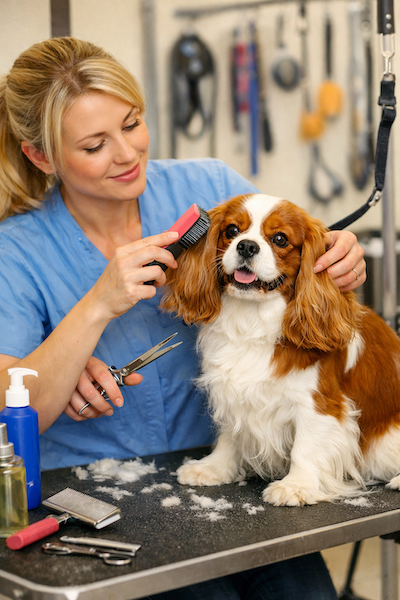
Cavalier King Charles Spaniel Grooming: Keeping Those Silky Ears and Feathered Coat Beautiful
Cavalier King Charles Spaniel Grooming: Keeping Those Silky Ears and Feathered Coat Beautiful
Cavalier King Charles Spaniels are gentle, loving dogs with an elegant, flowing coat that turns heads at the dog park. Their silky coat and those spectacular feathered ears are a big part of the breed's appeal — and they do require regular care to stay in good shape.
The good news: Cavalier grooming is not nearly as demanding as some long-haired breeds. With the right routine, you can keep your Cavalier looking beautiful without making grooming a full-time job.
Understanding the Cavalier Coat
Cavaliers have a medium-length, silky coat with feathering on the ears, chest, legs, and tail. Unlike double-coated breeds, Cavaliers have a single layer of coat, which means less shedding but more susceptibility to tangles in the feathered areas.
Coat colors are Blenheim (chestnut and white), tricolor, ruby, and black and tan. The Blenheim and white-coated Cavaliers tend to show dirt and staining more obviously.
Brushing
How often: 3–4 times per week; daily if kept in full coat.
The areas that mat most frequently on Cavaliers are the ears (especially where the ear meets the head), the armpits, and the leg feathering. These areas need focused attention every brushing session.
Use a pin brush or soft slicker brush for the main coat, and a fine-tooth comb to check for tangles in the feathering. Work from the ends inward — start at the tips of the ears or the bottom of the feathering and work your way toward the body.
If you encounter a tangle, spritz with a light detangling spray and work it loose gently. Never pull through tangles from the root — it breaks the fine silky hair and causes pain.
Bathing
How often: Every 2–3 weeks.
Cavaliers don't need frequent baths if they're indoor dogs with a solid brushing routine. When you do bathe, use a gentle, moisturizing shampoo and conditioner to keep the silky coat from drying out.
Dry thoroughly after bathing — damp Cavalier ears are a breeding ground for yeast and bacteria, which can cause chronic ear infections.
Ear Care: A Critical Priority
Cavaliers are one of the breeds most prone to ear infections, partly because their long, heavy ears trap heat and moisture and restrict airflow. Ear care is not optional for this breed.
Weekly routine:
- Inspect the inside of the ear flap for redness, swelling, or discharge
- Smell the ear — a yeasty or foul odor is a sign of infection
- Clean with a vet-approved ear cleaner using a cotton ball (never a cotton swab in the canal)
Keep the ear hair dry and ensure it's brushed free of tangles. After swimming or bathing, take extra care to dry the ears.
If your Cavalier is shaking their head, scratching at their ears, or you notice a dark discharge, see your vet — Cavaliers can develop ear infections quickly and they're uncomfortable.
Professional Grooming
How often: Every 6–8 weeks.
A professional Cavalier groom typically includes:
- Bath and blow-dry
- Brush-out of the full coat and feathering
- Trimming of paw pads and around the feet
- Tidying ear feathering (Cavaliers are kept in natural coat, not trimmed to a short style)
- Nail trim and ear cleaning
Cavaliers are kept in their natural coat — the breed standard calls for a long, flowing appearance without heavy scissoring. Groomers do tidy the feet and may lightly trim any extremely wispy coat ends, but they don't give Cavaliers dramatic haircuts.
Nail Trimming
Every 3–4 weeks. Cavaliers tend toward longer nails that curl if neglected. Long nails make it harder for the dog to stand and walk comfortably — a particular concern given that Cavaliers are already prone to joint issues.
Health Note: Heart Disease and Cavaliers
Cavalier King Charles Spaniels have a high prevalence of mitral valve disease, the leading cardiac condition in dogs. While this doesn't affect grooming directly, it's worth knowing when selecting a vet and when discussing any changes in your dog's exercise tolerance or coat quality. A healthy Cavalier has a shiny, vibrant coat — dull or thin coat can sometimes signal an underlying health issue.
Finding the Right Groomer
Cavaliers are sensitive and social dogs that do best with a calm, experienced groomer. Look for a groomer with experience in spaniel breeds or silky-coated toy breeds. They should understand how to work with fine, feathered coat without over-brushing or causing coat breakage.
For holistic veterinary care for your Cavalier, including cardiac wellness resources, visit our partner directory at Holistic Vet Directory.
About the Author
Dog Groomer Locator Editorial Team
Our editorial team researches grooming topics using verified business data and breed-care references. Content is drafted with AI assistance, fact-checked against published sources, and reviewed by publisher Kevin Collins.