Between-Groom Maintenance: How to Keep Your Dog Looking Good Between Appointments
Between-Groom Maintenance: How to Keep Your Dog Looking Good Between Appointments
Professional grooming appointments are important — a skilled groomer with the right tools, products, and technique can do things at home care simply can't replicate. But appointments happen every four to eight weeks, and a lot happens to a coat in the time between them. A dog who arrives matted, overgrown, or with neglected nails and ears takes significantly more time and has a less pleasant experience than a dog who's been maintained at home.
Between-groom maintenance isn't about doing the groomer's job at home. It's about bridging the gap between appointments so your dog is comfortable, the coat is manageable, and the professional appointment can focus on the quality work rather than catching up from neglect.
Here's a practical routine broken down by coat type, with specific guidance on what matters most.
Understanding Your Dog's Coat Type
Different coat types have different maintenance needs. Knowing what type your dog has helps you spend time on what actually matters.
Short smooth coats (Boxers, Beagles, Greyhounds, Dalmatians): Minimal maintenance. Light brushing, nail trims, ear cleaning.
Short dense coats (Labrador Retrievers, Beagles, Pugs): Some shedding management; regular brushing during shed season.
Double coats (German Shepherds, Golden Retrievers, Huskies, Corgis): Regular brushing to manage undercoat, prevent matting in furnishings, and catch debris.
Long silky coats (Cocker Spaniels, Yorkshire Terriers, Afghan Hounds, Shih Tzus): Frequent brushing to prevent tangles and mats; attention to high-friction areas.
Curly and wavy coats (Poodles, Doodles, Bichons, Portuguese Water Dogs): Most demanding maintenance; daily brushing recommended; highest mat risk.
Wire coats (Schnauzers, Scottish Terriers, most terriers): Moderate maintenance; hand-stripping or clipping at appointments; some between-groom brushing.
The Core Between-Groom Routine
Regardless of coat type, there are fundamentals that apply to every dog:
Brushing
The frequency varies by coat type, but the technique is the same: work from the ends toward the roots to remove tangles, then follow with a metal comb to verify the work. The comb is your quality check — if it passes through without snagging, the coat is tangle-free. If it catches, there's more to do.
Short smooth coats: Once a week is sufficient. Use a rubber curry brush to remove shed hair and stimulate the skin.
Short dense coats: Two to three times a week during shed season; once a week otherwise. A soft slicker brush or rubber curry.
Double coats: Two to three times a week minimum; daily during spring and fall coat blows. Undercoat rake followed by slicker brush.
Long silky coats: Every other day minimum; daily for dogs who spend time outdoors or who have heavier coat density. Slicker brush followed by metal comb.
Curly and wavy coats: Daily. This is the non-negotiable category. A Doodle or Bichon who isn't brushed daily will develop mats within days in high-friction areas. Slicker brush worked through in sections, followed by metal comb to confirm.
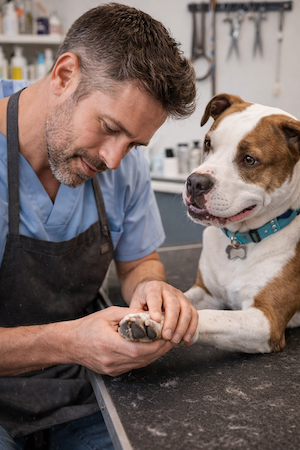
Nail Trimming
Nails should be checked every two to three weeks and trimmed when they touch the ground. If you hear clicking on hard floors, the nails are too long.
For most dogs, professional nail trimming every four to six weeks is sufficient if the dog wears nails on pavement between appointments. Indoor dogs or dogs on soft surfaces only may need trimming every three to four weeks.
If you're comfortable trimming nails at home, a pair of quality guillotine or scissor-style clippers and a styptic powder (for accidental quick nicks) are all you need. The critical tip: trim less than you think you need to. Small, frequent trims are better than trying to take a lot at once.
For dogs with black nails, trim in thin slices and watch the cut surface. When the center of the cut nail develops a dark circle or slightly moist-looking center, stop — you're at the quick.
Ear Cleaning
For most dogs, checking and light cleaning once a week is appropriate. Flip the ear open, look at the inner surface: pale pink, minimal odor, light tan wax is normal. Dark wax, significant buildup, redness, strong odor, or a dog who scratches ears persistently — all warrant a closer look and possibly a vet visit.
Use a veterinarian-approved ear cleaner with cotton balls, never cotton swabs. The cleaner goes into the canal, you massage the base for thirty seconds, let the dog shake, then wipe the visible outer canal with a cotton ball.
For floppy-eared breeds (Basset Hounds, Cocker Spaniels, Bloodhounds, any long-eared breed), weekly cleaning is the minimum. These breeds are more prone to infections because floppy ears reduce airflow and create warmth and moisture.
Eye Area
Some breeds develop eye discharge that stains the coat below the eye (epiphora) — Maltese, Bichons, Shih Tzus, and Poodles are particularly prone to this, as are brachycephalic breeds like Bulldogs, Pugs, and French Bulldogs.
Wipe the eye area daily with a soft damp cloth or an eye wipe designed for pets. For significant staining, there are tear stain removers available, but persistent or worsening tear staining should be discussed with your vet, as it can indicate blocked tear ducts, eye irritation, or other issues.
Teeth
Dental disease is the most common health condition in dogs, affecting the majority of dogs over age three. Plaque and tartar buildup lead to gum disease, which is painful and has documented links to systemic health problems.
Daily toothbrushing is ideal. Any brushing is better than none. Use a dog-specific enzymatic toothpaste (never human toothpaste, which contains xylitol or fluoride that can harm dogs) and a small-headed dog toothbrush or finger brush. Work in circular motions at the gumline, spending about thirty seconds per side.
Dental chews, water additives, and dental diets help reduce plaque but don't replace brushing. Annual or biennial dental cleanings at the vet are still necessary for most dogs.
Targeted Maintenance by Coat Type
For Curly and Wavy Coat Owners: The Mat Check
Your most important between-groom task is a daily mat check in the key areas: armpits (where the front legs meet the chest), behind the ears, under the collar, between the back legs (the "groin" area), at the base of the tail, and the belly.
Run your fingers through these areas every day. If you feel resistance, address it immediately with a dematting spray and slicker brush before it tightens. Catching a small tangle takes two minutes. Removing an established mat takes twenty, is uncomfortable for the dog, and may not be fully possible at home.
For Double-Coat Owners: The Undercoat Management
The most important tool in your between-groom arsenal is an undercoat rake. Use it in the direction of coat growth, working through the body coat in sections. During peak shed season (late spring, early fall), this should happen daily. The rest of the year, two to three times a week is sufficient.
The slicker brush and metal comb follow the rake to finish. After the full routine, running a hand against the lay of the coat tells you if there's more undercoat to release — if the coat puffs up significantly against the direction of growth, there's still shed coat packed in.
For Long Silky Coat Owners: The Tangle Prevention Routine
The high-friction spots are your focus: behind the ears, where the collar sits, in the armpits, and between the back legs. A light spritzing of leave-in conditioner or detangling spray before brushing makes these areas easier to work through and reduces hair breakage.
For dogs with ears that tangle easily, keeping a small amount of conditioning spray worked through the ear feathering daily keeps them smooth. Hold the ear at the base while brushing to avoid pulling against the dog's head.
Building the Routine Your Dog Will Accept
The most effective between-groom routine is the one your dog will tolerate calmly. A brushing session that turns into a wrestling match is neither enjoyable for the dog nor effective for the coat.
Start with brief sessions
If your dog is new to home grooming or has developed a resistance, start with very short sessions — two minutes, focused on one area. End before the dog gets frustrated. Gradually increase duration as the dog becomes more comfortable.
Make it predictable
Dogs do well with routines. Same time, same location, same sequence makes the experience familiar and therefore less concerning. Many dogs who are brushed at the same time every evening become calm and relaxed about it because it's simply part of the day.
Use food strategically
For dogs who resist handling in specific areas — paws, ears, face — use high-value treats paired with the handling. Touch the ear, give a treat. Clip a nail, give a treat. The goal is to change the dog's emotional response to the handling, not just manage through each session.
Know when to stop
A dog showing significant stress signals — whale eye, lip licking, turning away, low growling — is telling you they've reached their limit. Stop the session before it becomes a conflict. A shorter session that ends calmly is better than a longer one that ends in a struggle.
Communicating With Your Groomer
The best between-groom maintenance creates a partnership with your groomer. When you arrive for an appointment, tell them:
- What you've been doing at home (brushing frequency, products used)
- Where you've been finding tangles or resistance
- Any new sensitivities or behavioral changes
- How the dog has been generally (health changes, energy level)
A groomer who knows your home routine can calibrate their work accordingly — focusing more time on the areas you've been struggling with, or confirming that your home care is doing a great job and adjusting their approach to the appointment accordingly.
For finding a groomer who communicates well and partners with you on your dog's coat health between appointments, Dog Groomer Locator is a good starting point. Look for groomers who describe their approach to coat maintenance and who offer guidance on home care in their service listings.
Quick Reference: Between-Groom Frequency Guide
Daily:
- Curly/wavy coat brushing (Doodles, Poodles, Bichons)
- Eye area cleaning for stain-prone breeds
- Fold cleaning for French Bulldogs and similar
Every 2–3 days:
- Long silky coat brushing
- Double coat brushing (daily during peak shed)
Weekly:
- Short coat brushing
- Ear cleaning
- Teeth brushing (minimum; daily is better)
Every 2–3 weeks:
- Nail check and trim as needed
- Paw pad inspection and balm application
- Interdigital hair trim (as needed)
Every 4–8 weeks (professional):
- Full groom appointment
- Professional nail grind
- Deep conditioning treatment if needed
Good between-groom maintenance doesn't have to be time-consuming — it has to be consistent. Ten minutes of daily brushing done regularly prevents the hour-long dematting session that nobody wants. Paw care done weekly prevents the cracked pads that cause limping. Ear care done regularly prevents the infection that costs more at the vet than a year of ear cleaning supplies.
Build the habits, keep them consistent, and your dog will arrive at every appointment in good condition — and your groomer will notice.
For dogs with recurring skin, ear, or dental issues that keep coming back despite a good home care routine, an integrative veterinarian can look at diet and immune function as contributing factors. Holistic Vet Directory is a helpful resource for finding vets who combine conventional diagnosis with nutritional and lifestyle support.
About the Author
Dog Groomer Locator Editorial Team
Our editorial team researches grooming topics using verified business data and breed-care references. Content is drafted with AI assistance, fact-checked against published sources, and reviewed by publisher Kevin Collins.